

Goliry In-Depth Review
Canva Pro: We Handed It a Real Marketing Deliverable List and Skipped Our Usual Design Software
For one project cycle, we banned ourselves from opening our usual professional design tools and built every asset — social posts, a pitch deck, a one-page flyer, and a short promotional video — entirely inside Canva Pro.
The Premise: One Tool, Every Format
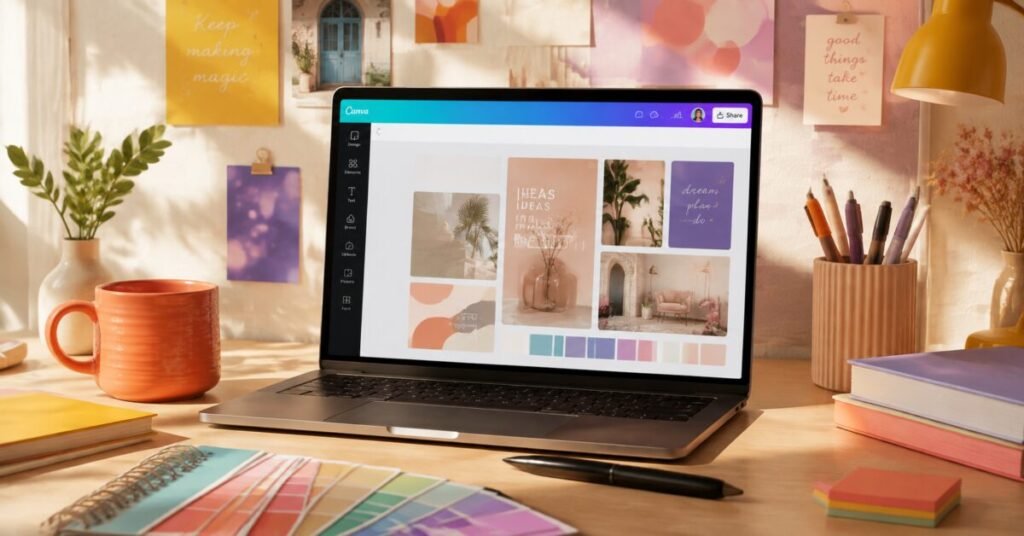
Canva’s original pitch — design made accessible to people who aren’t designers — has expanded dramatically. Canva Pro now covers social graphics, presentations, video editing, simple animation, brand kits, and even basic print-ready documents, all within a single subscription. The question we set out to answer: is that breadth actually usable, or does it spread the product thin?
Breadth-versus-depth is the central tension in almost every “all-in-one” software category, and design tools are no exception. A platform that tries to do everything often ends up doing nothing particularly well. Our testing was specifically designed to probe that tension — pushing Canva Pro across multiple very different deliverable types in a short window to see where the seams showed and where the integration genuinely paid off.
Feature Deep Dive
1. Templates and the Drag-and-Drop Editor
Canva’s template library remains its single biggest asset. Searching for “Instagram carousel” or “quarterly report cover” returns dozens of professionally designed starting points, and the drag-and-drop editor makes customizing them — swapping colors, fonts, and images — approachable even for team members with zero design background. Our least design-experienced tester produced a passable social media carousel in under fifteen minutes.
2. Brand Kit
The Brand Kit feature lets you lock in brand colors, fonts, and logos so every new design automatically pulls from the same palette. This turned out to be one of the most valuable features for consistency — once set up, nobody on the team had to remember the exact brand hex codes, and off-brand color choices essentially stopped happening.
3. Magic Studio (AI Tools)
Canva’s AI suite — background removal, image generation, “Magic Expand” for extending an image’s canvas, and text-to-video tools — performed impressively for quick edits. Background removal in particular was near-instant and clean, even on complex images with fine detail like hair or foliage. AI image generation was serviceable for background textures and abstract graphics, but for anything requiring specific, recognizable subject matter, results were inconsistent and often needed several regenerations.
4. Video and Basic Animation
We built a 30-second promotional video entirely in Canva, using stock footage from its library, text animations, and background music from its audio catalog. The result was genuinely presentable — not Hollywood-grade, but easily good enough for social media or an internal presentation. Editing controls are simplified compared to dedicated video software, which is exactly the tradeoff most non-video-editors will happily accept.
5. Team Collaboration and Approval Workflows
Multiple people could comment on and edit the same design simultaneously, similar to collaborative document editing. The approval workflow — where a design must be signed off before publishing — added a helpful layer of process for a small marketing team without needing a separate project management tool bolted on.
Where Canva Pro Hits Its Ceiling
For genuinely complex, pixel-precise design work — intricate print layouts, advanced vector illustration, detailed photo retouching — Canva Pro is not a replacement for professional design software. Power users accustomed to granular control over typography, layering, and color management will find Canva’s simplicity occasionally limiting rather than liberating. It’s best understood as a tool that handles 80% of everyday design needs extremely well, not a full substitute for a trained designer on complex projects.
We also ran into occasional frustration with font pairing consistency across different design types — a font that rendered beautifully in a social post occasionally looked slightly off in a presentation export due to differing default line-height handling between formats. Minor, but worth a final visual check before publishing anything format-critical.
Pricing Breakdown
| Plan | Price | Notes |
|---|---|---|
| Free | $0 | Limited templates & assets |
| Pro | ~$120/yr (1 user) | Brand Kit, Magic Studio, premium assets |
| Teams | ~$100/yr per person (5+ users) | Shared brand controls & approvals |
| Enterprise | Custom | Advanced admin & security controls |
Pros and Cons
Strengths
- Extremely approachable for non-designers
- Brand Kit keeps a whole team visually consistent
- Background removal and quick AI edits are genuinely excellent
- One subscription covers graphics, video, and presentations
Weaknesses
- Not a substitute for professional design software on complex work
- AI image generation is inconsistent for specific subjects
- Video editing controls are simplified, limiting fine control
- Heavy reliance on templates can lead to same-y looking designs
Real-World Test: The One-Hour Pitch Deck Emergency
To simulate a genuinely stressful, realistic scenario, we gave ourselves one hour to build a ten-slide investor-style pitch deck from a rough outline, using only Canva Pro and no pre-existing template we’d already customized.
We started from a “startup pitch deck” template, which came pre-structured with sensible slide types: problem, solution, market size, business model, and team. Swapping in our Brand Kit colors and fonts took under two minutes and instantly made the generic template feel intentional rather than borrowed. The most time-consuming part wasn’t the design — it was writing clear, concise slide copy, which is exactly as it should be; the tool got out of the way rather than becoming the bottleneck.
For a slide needing a custom graphic illustrating a market-size comparison, we used Canva’s chart tools rather than the AI image generator, since accuracy mattered more than aesthetics for that particular slide. The chart tool was straightforward, pulling in our numbers and rendering a clean bar comparison without needing to leave the deck to build it elsewhere. We finished the ten-slide deck in fifty-two minutes, with eight minutes to spare for a final proofread — a genuinely useful outcome for anyone who has faced a similarly tight deadline before an investor call or internal review.
How It Compares to Alternatives
| Tool | Strongest At | Weaker At |
|---|---|---|
| Canva Pro | Speed, templates, all-in-one format coverage | Pixel-precise, highly custom design work |
| Professional design software | Full creative control, print precision | Steep learning curve for non-designers |
| Simple slide/document tools | Familiarity, minimal learning curve | Visual polish and design flexibility |
The pattern that emerged across our testing is consistent: Canva Pro wins whenever speed and consistency matter more than absolute creative control, which describes the overwhelming majority of day-to-day marketing and internal design work.
Licensing and Commercial Use
Pro plans include a commercial license covering most stock photos, icons, and templates for business use, which removes a common source of anxiety for marketing teams worried about copyright issues. It’s still worth checking individual asset licensing notes for anything with more restrictive terms, particularly certain premium video clips and fonts, before using them in large-scale paid advertising campaigns.
Tips to Get More Value From Canva Pro
A handful of habits consistently separated fast, polished results from slower, more frustrating sessions during our testing period.
- Set up the Brand Kit before touching any templates. Doing it in the opposite order meant re-editing every element manually after the fact, which erased most of the time savings templates were supposed to provide.
- Use “Magic Expand” for awkward image crops instead of hunting for new stock photos. It repeatedly saved time compared to searching the stock library for an image with the exact right aspect ratio.
- Lock template elements you don’t want teammates to change. On shared team projects, locking the logo and brand color elements prevented accidental edits from less design-savvy collaborators.
- Keep a folder of “approved” starting templates. Letting the whole team search the entire template library led to visual inconsistency; curating a shortlist of pre-approved, brand-aligned templates kept output more cohesive.
Frequently Asked Questions
Can a whole team share one Brand Kit?
Yes — Brand Kits are shareable across a Canva Team, ensuring everyone pulls from the same approved colors, fonts, and logo files.
Is Canva Pro suitable for print materials, not just digital?
Yes, with built-in bleed and print-ready export settings for common formats, though highly technical print jobs may still benefit from a professional print shop’s file review.
How good is the mobile app compared to desktop?
Surprisingly capable for quick edits and social content, though complex multi-page projects like decks and long documents are still easier to manage on desktop.
Can Canva Pro handle a full company website mockup?
It can produce reasonable static mockups for early-stage concepts, but it isn’t a substitute for dedicated web design or prototyping tools once a project needs real interactivity or precise responsive behavior.
Is switching from a free plan to Pro a disruptive process?
Not at all — existing designs carry over immediately, and the upgrade simply unlocks additional templates, assets, and features without requiring any rebuilding of prior work.
Final Verdict
★★★★★☆ — 4.5 / 5
Canva Pro won’t replace a skilled design team on complex, brand-defining work — but for the day-to-day flood of social posts, decks, and one-off graphics most teams actually need, it’s fast, consistent, and remarkably capable for the price.


Leave a Reply