

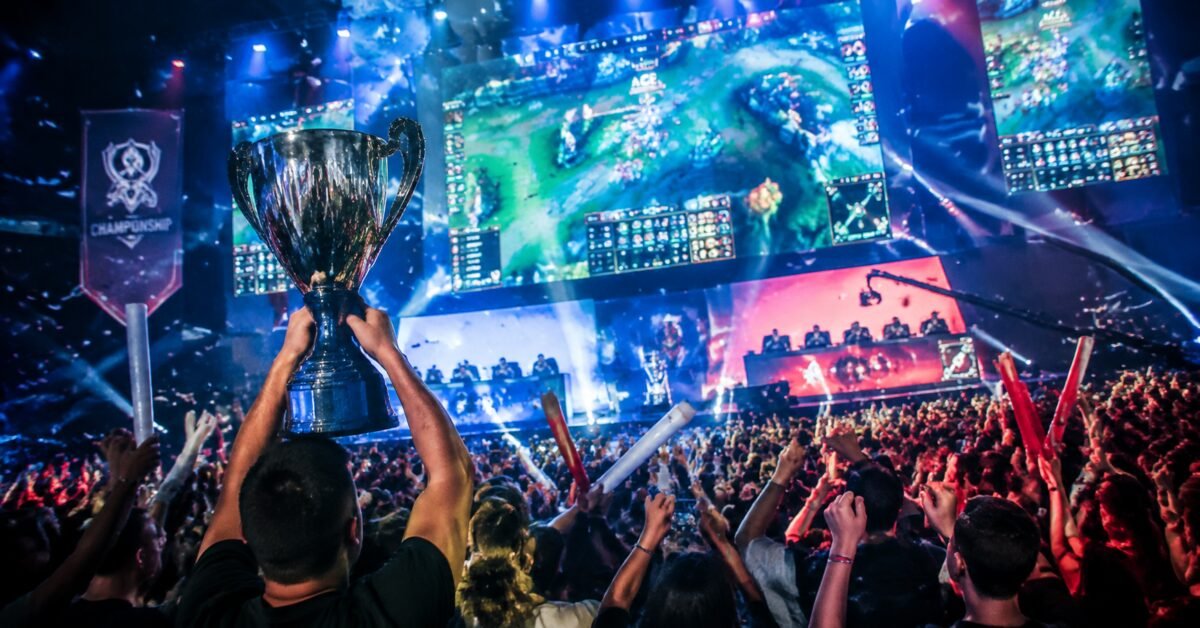
Esports spent its first two decades fighting to be taken seriously. That fight, at least in the broad strokes, appears to be over — and the industry now finds itself grappling with a very different set of problems that come with genuine mainstream success.
From Niche Curiosity to Cultural Fixture
It wasn’t so long ago that competitive gaming events were held in convention center side-rooms, streamed to a modest audience of dedicated fans, and largely ignored by traditional sports and entertainment media. That landscape has changed dramatically. Major tournament finals now regularly fill genuine sports arenas, draw broadcast partnerships with traditional media companies, and generate viewership figures that rival — and in some specific cases exceed — major traditional sporting events among younger demographics.
This shift hasn’t happened uniformly across every game, and it’s worth being precise about that. A handful of specific competitive titles, generally strategy games, team-based shooters, and multiplayer online battle arena games with sustained competitive scenes spanning many years, account for the overwhelming majority of esports’ mainstream visibility. Plenty of games with passionate competitive communities remain resolutely niche, and that’s unlikely to change regardless of the broader industry’s growth.
The Money Behind the Games
Esports revenue flows through several distinct channels, and understanding them separately explains a lot about why the industry has grown the way it has:
- Sponsorships and advertising remain the largest single revenue category, as brands outside the traditional gaming industry — beverage companies, automotive brands, financial services — have increasingly bought into esports as a way to reach younger audiences that traditional advertising struggles to engage.
- Media rights and broadcasting have grown substantially as streaming platforms and, increasingly, traditional broadcasters compete for exclusive rights to major tournaments.
- Merchandise and ticketing function much like traditional sports, with team jerseys, event tickets, and branded goods generating meaningful direct revenue.
- Publisher investment remains a distinct and important category — many of the largest esports ecosystems are directly subsidized by the game’s own publisher, who benefits indirectly through sustained player engagement and game longevity rather than direct tournament profit.
This last point is worth dwelling on, because it explains one of the industry’s more unusual dynamics: unlike traditional sports leagues, which are largely independent of any single product manufacturer, most major esports scenes remain financially and structurally dependent on the publisher of the underlying game — a publisher that can, and occasionally does, dramatically restructure or even discontinue support for a competitive scene with comparatively little external oversight.
Teams and Organizations Are Professionalizing Fast
Top esports organizations today bear little resemblance to the informal amateur teams of a decade ago. Modern organizations typically employ dedicated coaching staff, sports psychologists, nutritionists, and performance analysts — infrastructure borrowed almost directly from traditional professional sports. Player contracts increasingly include structured salaries, health benefits, and defined career transition support, addressing longstanding criticism that early esports careers offered players little financial security and even less protection once their competitive careers inevitably ended.
This professionalization has been driven partly by necessity. As esports salaries and revenue have grown, so has the financial and reputational risk of poor player management, and organizations that fail to provide adequate support increasingly struggle to retain top talent against better-resourced competitors.
“Ten years ago, being a professional player meant living in a house with your teammates and hoping for the best,” one longtime team owner reflected recently. “Now it looks like managing any other high-performance athletic career — because that’s genuinely what it’s become.”
Growing Pains That Come With Mainstream Success
Rapid growth has introduced problems the industry is still working through. Player burnout remains a persistent concern, with competitive careers in most major titles still concentrated heavily among players in their late teens and early twenties — a reflection of both the physical demands of extremely high-level reaction-based competition and the mental toll of near-constant practice schedules.
Financial instability at the organizational level has also become a recurring story. Several well-known esports organizations have scaled back operations or shut down entirely in recent years, victims of business models that expanded faster than sustainable revenue could support — a pattern uncomfortably reminiscent of broader speculative bubbles in other industries.
There are structural governance questions too. Unlike traditional sports, which typically have independent governing bodies setting rules, schedules, and competitive standards, most esports scenes remain governed directly by the publisher of the game in question — an arrangement that gives publishers significant, largely unchecked control over prize structures, competitive formats, and player conduct standards.
Broadcasting and the Streaming Ecosystem
The relationship between esports and streaming platforms has become deeply symbiotic. Live streaming built the audience that made esports commercially viable in the first place, and tournament organizers now design broadcasts specifically with streaming-native viewing habits in mind — multiple camera angles, real-time statistical overlays, and integrated chat interaction that traditional broadcast sports have only recently begun to experiment with themselves.
Interestingly, this dynamic has started to flow in the opposite direction as well, with traditional sports broadcasts increasingly borrowing production techniques pioneered in esports coverage, including real-time data visualization and multi-angle replay systems originally developed to make fast-paced digital competition legible to television audiences.
Women and Underrepresented Players in Competitive Gaming
As esports has moved into the mainstream, its historically poor track record on diversity has come under increased scrutiny. Women remain significantly underrepresented at the highest competitive levels across nearly every major title, and the industry has faced persistent, well-documented criticism over harassment within both competitive and casual online spaces that has made sustained participation genuinely difficult for many players outside the demographic that has traditionally dominated competitive gaming.
In response, dedicated women’s leagues and tournaments have grown substantially in both number and prize pool size, though opinions within the community remain genuinely divided on whether separate competitive structures represent meaningful progress toward inclusion or, alternatively, risk becoming a way of sidestepping the harder work of making mixed-gender competitive spaces genuinely welcoming and safe. Several publishers have also invested in stricter conduct enforcement and reporting systems specifically aimed at competitive and ranked play, with mixed results reported by players and community observers so far.
The College and Amateur Pipeline
Formal educational infrastructure around esports has expanded dramatically. Universities across multiple countries now field varsity esports teams with scholarship funding comparable in structure, if not always in scale, to traditional collegiate athletics programs. This institutional pipeline has created a more structured path into professional competition than existed in esports’ earlier, more chaotic years, when most top players emerged directly from unstructured online ladder play with little formal coaching or developmental support along the way.
High school esports programs have followed a similar trajectory, increasingly treated as a legitimate extracurricular activity by school administrators who once dismissed competitive gaming as, at best, a hobby unworthy of institutional support. This earlier, more structured entry point has measurably shifted how players develop, with many top competitors now receiving formal coaching and strategic training years earlier than was typical in the sport’s first decade.
Betting, Fantasy Leagues, and New Revenue Frontiers
Esports betting and fantasy competition platforms have emerged as a substantial and still-growing revenue category, closely mirroring the gambling ecosystems that have long surrounded traditional professional sports. This growth has not been without controversy, particularly given esports’ younger-skewing audience compared to traditional sports betting demographics, prompting several jurisdictions to introduce specific regulatory frameworks aimed at esports wagering rather than treating it identically to traditional sports betting regulation.
Match-fixing concerns, long a serious problem in traditional sports betting, have surfaced in esports as well, particularly at lower competitive tiers where player salaries remain modest enough that the financial incentive to manipulate outcomes can be significant. Publishers and tournament organizers have responded by investing more heavily in integrity monitoring systems, though enforcement capacity still varies considerably between well-funded major titles and smaller competitive scenes with fewer resources dedicated to oversight.
What Comes Next
The next phase of esports growth will likely be defined less by explosive audience expansion — much of that growth curve has already happened — and more by the industry maturing into sustainable, stable institutions comparable to traditional professional sports leagues. That means resolving governance questions, building more durable financial models for teams and organizations, and continuing to professionalize player welfare and career support.
Whether esports fully closes the remaining gap with traditional professional sports in terms of institutional stability and long-term player security remains an open question. But the era of esports needing to justify its own legitimacy as a category appears to be firmly over. The industry’s challenges now are the challenges of a genuinely mainstream entertainment sector — which, for an industry that spent its first two decades fighting for basic recognition, is itself a remarkable turning point.
What seems clear is that the next chapter of this story will be written less by any single breakout tournament or viral highlight reel, and more by the slower, less glamorous work of building durable institutions — stable leagues, fair governance, reliable player protections — capable of outlasting any individual game’s competitive lifespan. That’s a fundamentally different challenge than the one esports faced in its early years, and arguably a harder one to solve. But it’s also the clearest sign yet that competitive gaming has genuinely arrived as a permanent fixture of the broader entertainment landscape, rather than a passing trend waiting to fade.


Leave a Reply